Guide to Choosing a Projector for Your Home
July 24, 2026
Shopping for a home projector can feel like an overwhelming task. Between deciphering technical acronyms like DLP, UHD, and ISO lumens, and figuring out whether a device will actually work in a brightly lit British living room, it’s easy to get stuck in analysis paralysis.
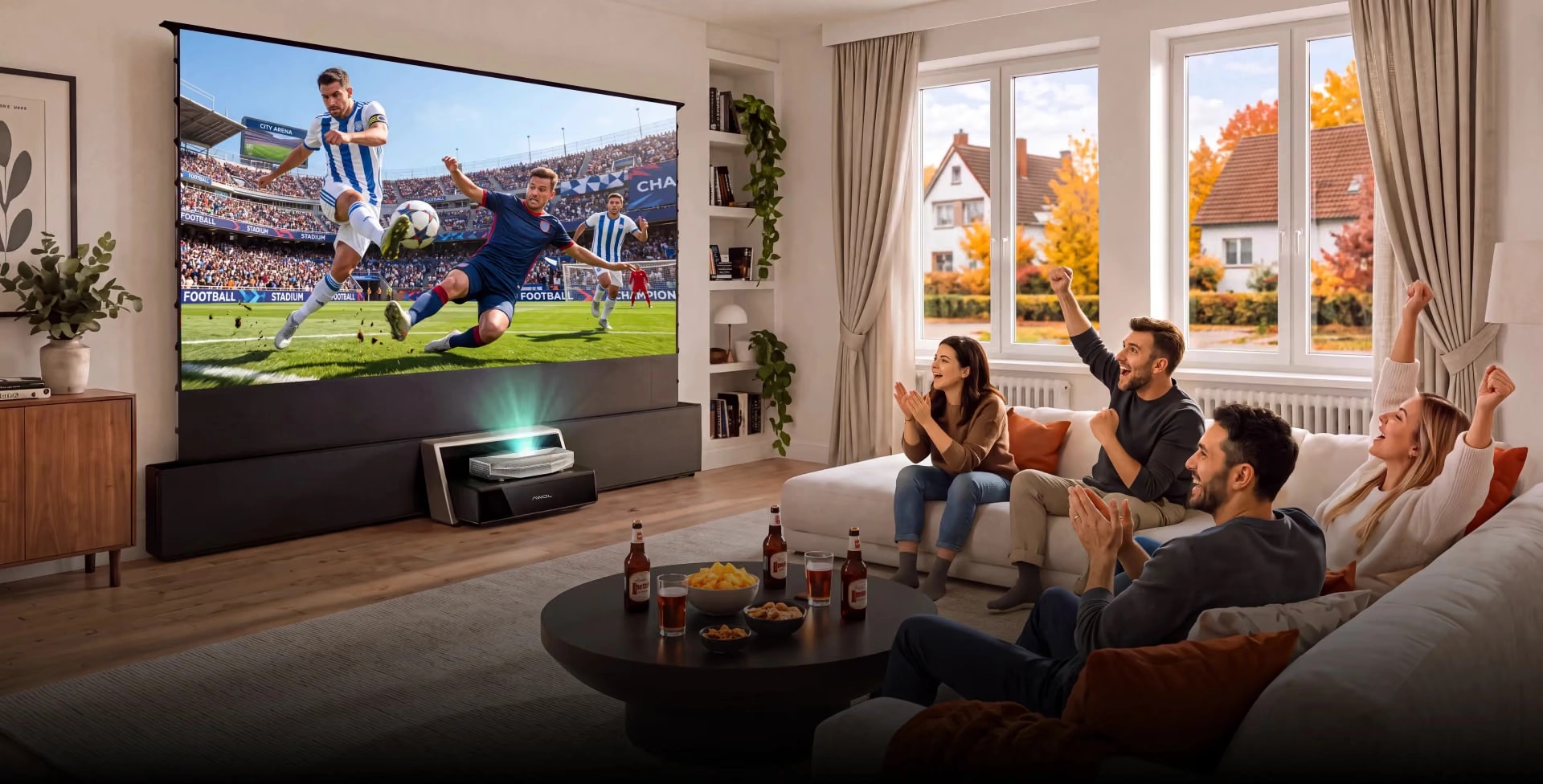
The good news is that home projection technology has shifted dramatically. It is no longer reserved for dedicated, pitch-black basement cinema rooms. Modern setups can easily adapt to your everyday life, whether you are watching daylight football matches, streaming the latest prestige dramas, or playing fast-paced video games.
This guide breaks down everything you need to know to transition from confusion to complete confidence in choosing the ideal display for your home.
Key Takeaways: Home Projectors at a Glance
If you are short on time, here are the vital points to consider before buying a home projector:
- Go UST for Living Rooms: Ultra-Short Throw (UST) projectors sit directly beneath your screen on a standard sideboard, completely eliminating tricky ceiling installations and walking shadows.
- Daylight Requires 2,600+ ISO Lumens: For everyday viewing without drawing the curtains, aim for a brightness range of 2,600 to 3,300 ISO Lumens, paired with an Ambient Light Rejecting (ALR) screen.
- Prioritise RGB Pure Triple Laser: For true cinematic colour depth, look for triple laser technology over standard LED or single-laser units to achieve a wider colour gamut (up to 110% REC 2020).
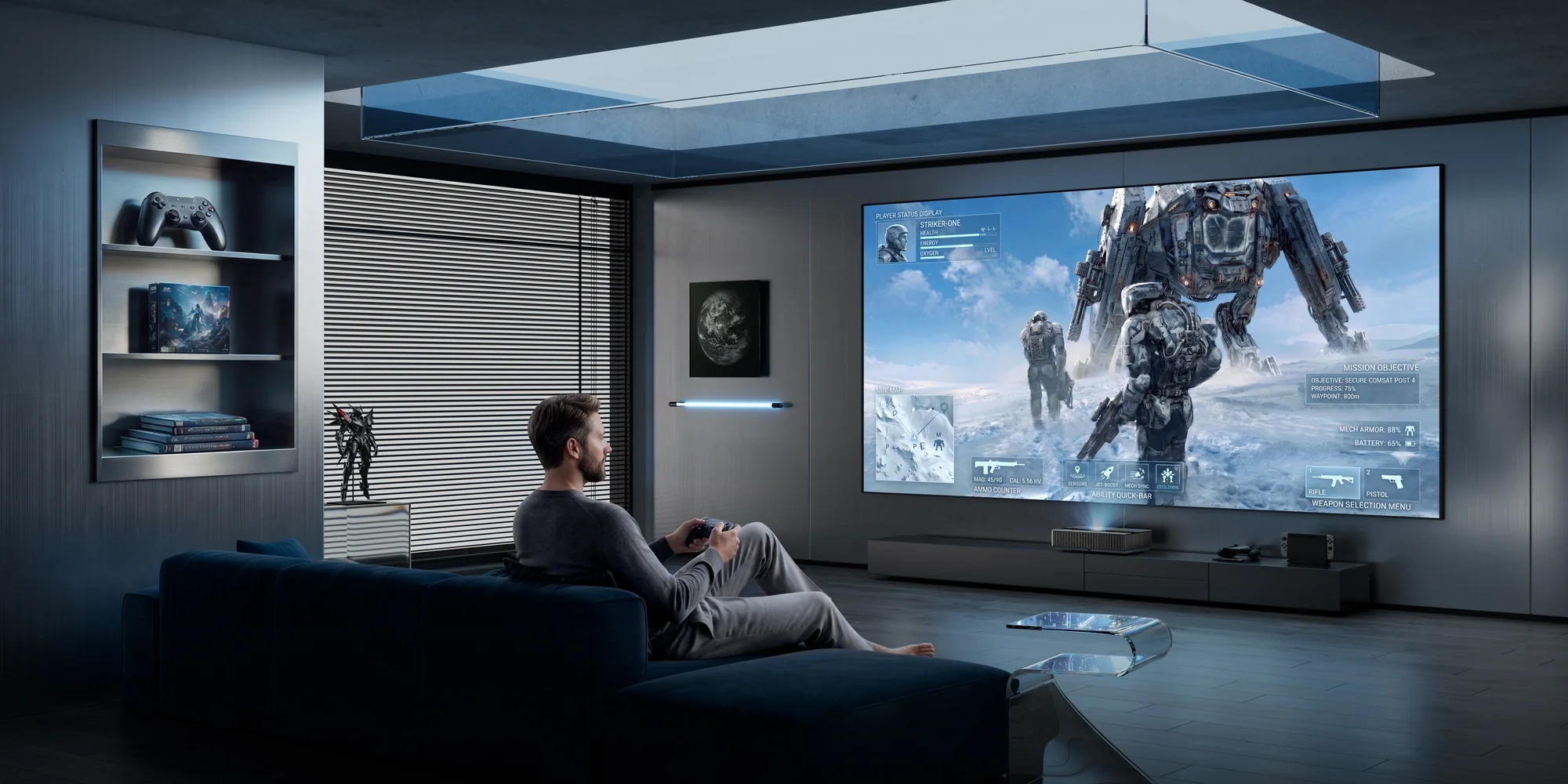
- Gamers Need Ultra-Low Input Lag: Look for specialized display controllers that offer Auto Low Latency Mode (ALLM), Variable Refresh Rate (VRR), and rapid response times (down to 1ms).
- Bundles Offer the Best Cost-Per-Inch Value: Purchasing a projector bundled with a matching ALR or motorized floor-rising screen provides a massive 100-inch to 120-inch setup that yields better cost-per-inch value than a traditional oversized TV.
Which Type of Projector is Best for Home Use?
To narrow down your choices, it helps to understand how the three primary design configurations stack up against each other in a typical home setting:
| Projector Type | Space & Installation | Primary Advantage | Best Suited For |
|---|---|---|---|
| Long-Throw | Sits several metres back; usually requires ceiling mounting and long cable runs. | Excellent value for traditional, dedicated dark rooms. | Dedicated home cinema rooms with full light control. |
| Portable / Lifestyle | Compact and easy to move; can be placed on coffee tables or tripods. | High flexibility; easy to move from room to room or take outdoors. | Casual movie nights and temporary setups across the house. |
| Ultra-Short Throw (UST) | Sits directly below the screen; placed on a standard TV media console. | Projects a massive 100"+ image from inches away; zero installation clutter. | Main living room TV replacements and premium home cinemas. |
Can a Projector Really Replace a TV at Home?
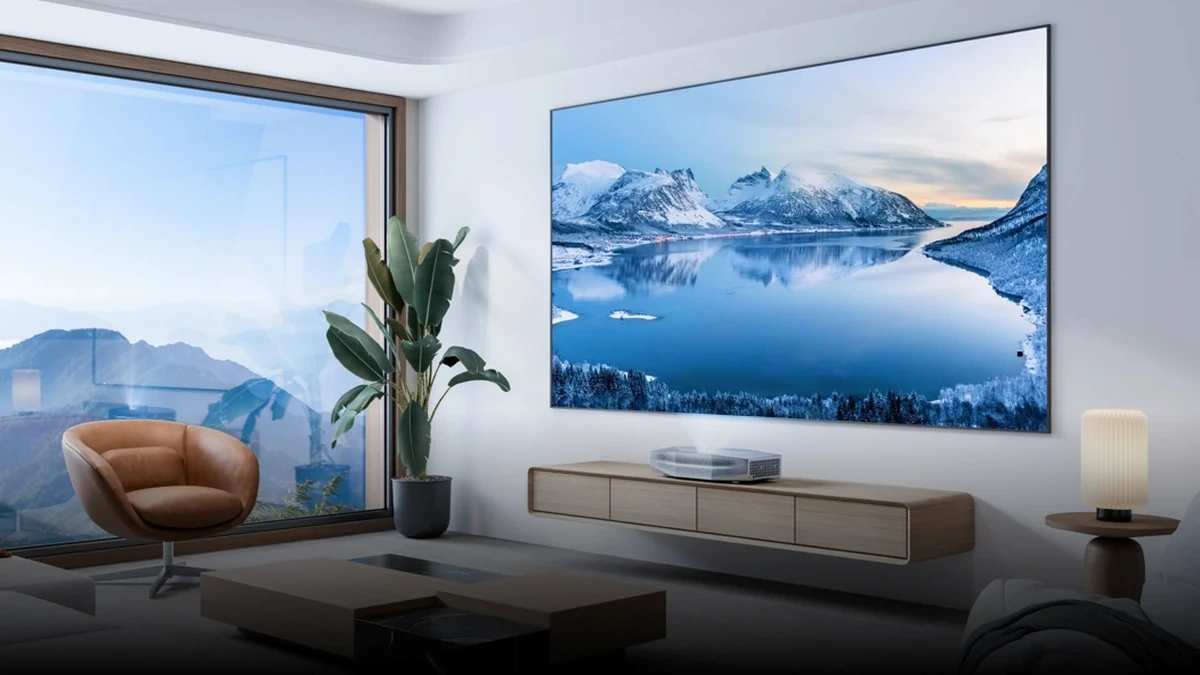
Historically, the answer was "only if you draw the curtains." Today, however, an Ultra-Short Throw projector can genuinely replace a traditional television in a main living space.
The secret to making a projector work as a full-time TV replacement relies on two components working together: high light output from the projector and a specialized Ambient Light Rejecting (ALR) Projector Screen.
Unlike standard white walls or basic screens that scatter light in every direction, an ALR screen features microscopic physical ridges. These ridges are engineered to reflect light coming from directly below (the projector) out toward your eyes, while absorbing or deflecting light coming from above or the sides (windows and ceiling lights). When paired with a bright laser light engine, this setup delivers deep contrast and vivid colours even during the daytime, offering a true "Laser TV" experience without the reflective glare of a giant glass television screen.
Choosing a home projector: The vital specs decoded
When evaluating different models, you can safely bypass most of the marketing fluff if you focus heavily on four core technical specifications.
Light Source & Colour Range (RGB Triple Laser vs. LED)
The light source determines how long your projector lasts and how accurate its colours look. While entry-level models use traditional lamps that require replacement every few thousand hours, premium modern displays use solid-state LED or Laser engines lasting over 25,000 hours.
For the ultimate visual fidelity, look for RGB Pure Triple Laser technology. Unlike single-laser systems that use a blue laser and a phosphor wheel, triple laser systems utilize independent red, green, and blue lasers. This allows the projector to cover an incredibly wide colour spectrum—often hitting 110% of the REC 2020 colour space—resulting in richer, more lifelike tones that mimic commercial IMAX and Dolby Vision cinemas.
Brightness & Contrast (ISO Lumens & EBL)
Projector brightness is measured in lumens, but the standard matters. Always look for ISO Lumens (or ANSI Lumens), which are verified international testing standards. Beware of cheap generic listings claiming "marketing lumens" or "source lumens," which are often vastly inflated.
- Under 1,500 ISO Lumens: Best suited for pitch-black rooms or nighttime viewing.
- 2,000 to 2,500 ISO Lumens: Comfortable for ambient low-light viewing.
- 2,600 to 3,300+ ISO Lumens: The ideal sweet spot for daytime living room viewing, offering enough power to cut through ambient indoor lighting.
However, brightness is only half the story; contrast is what gives an image its depth. A high native contrast ratio ensures that deep blacks look dark gray or black rather than washed-out gray. Look for premium models that utilize an Iris lens system to maximize native contrast (aiming for around 6000:1 natively), combined with advanced technologies like Enhanced Black Level (EBL) Contrast which can scale up to 60000:1. This is crucial for retaining shadow details in dark film scenes during ambient daytime viewing or cozy winter night movie marathons.
Throw Ratio & Space Requirements
The throw ratio tells you how wide the image will be relative to how far the lens is from the wall.
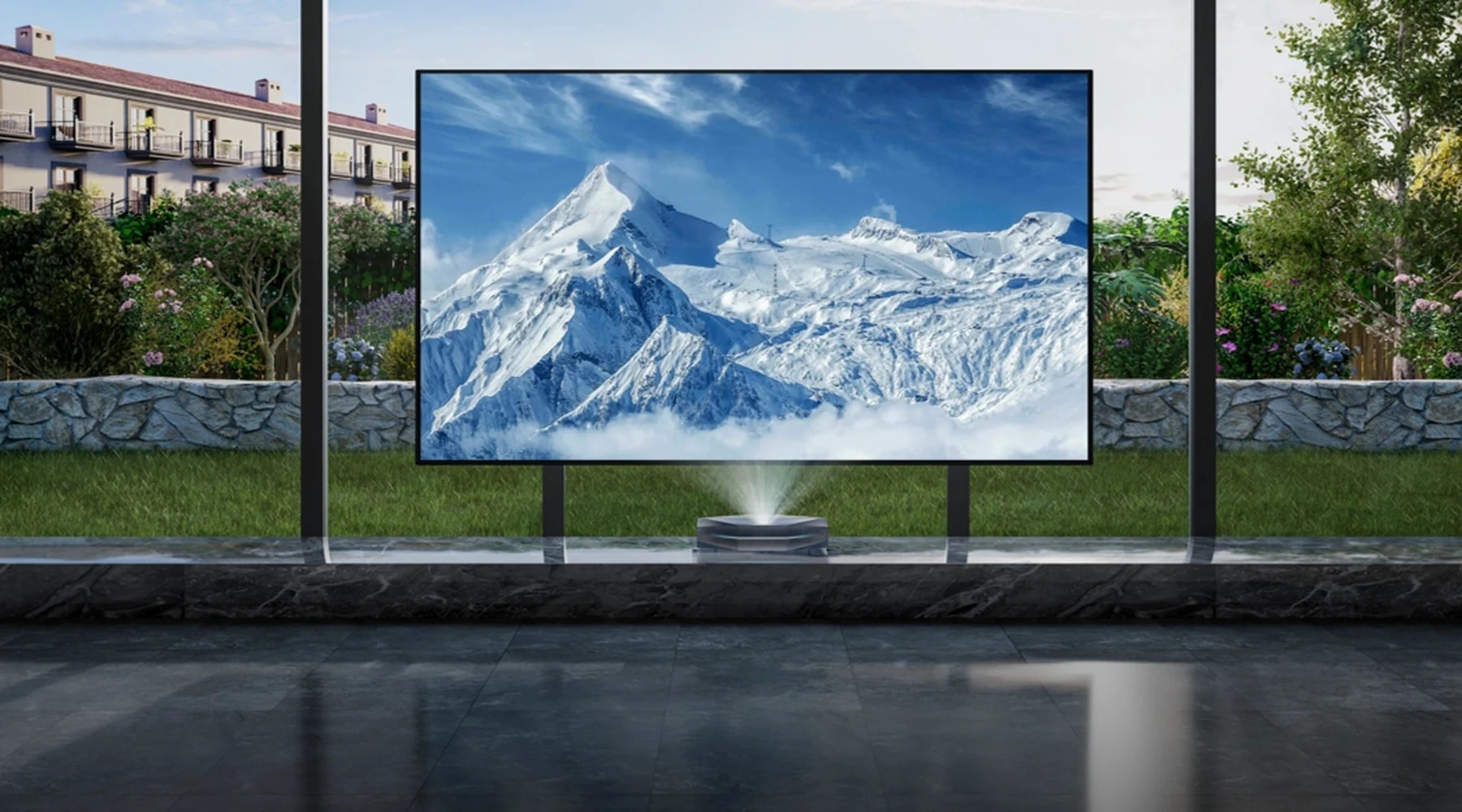
A projector with an ultra-short throw ratio of 0.2:1 can cast a massive 100-inch diagonal image while sitting roughly 20 to 30 centimetres away from the projection surface.
This makes setup incredibly simple, as the device fits naturally onto standard UK TV sideboards and media cabinets without rearranging your furniture.
Smart Connectivity & OS
A great picture means nothing if it is a hassle to watch your favourite content. Look for systems that integrate a native smart platform like Google TV OS or Android TV directly into the machine. This ensures you can access streaming apps like Netflix, Prime Video, and Disney+ natively. Additionally, modern high-bandwidth connectivity options like WiFi 7 and HDMI 2.1 ports ensure smooth, buffer-free streaming and support for next-generation gaming consoles.
Best home projectors 2026: The top models compared
To help you understand how these specifications translate into real-world options, let's look at a comprehensive, objective overview of the top projector profiles available in 2026.
| Feature | AWOL Vision Aetherion Series | "Brand H" Premium Laser | "Brand S" Smart Projector | "Brand X" Mini Laser |
|---|---|---|---|---|
| Light Source | RGB Pure Triple Laser | Triple Laser Architecture | Single Laser / Phosphor | Hybrid LED/Laser |
| Brightness | 2600 to 3300 ISO Lumens | 2500 ISO Lumens | 2200 ANSI Lumens | 1800 ISO Lumens |
| Contrast Ratio | Native 6000:1 (with Iris); 60000:1 EBL Contrast | ~3000:1 Dynamic Contrast | ~2000:1 Dynamic Contrast | ~1000:1 Native Contrast |
| Throw Ratio | 0.2:1 (Ultra-Short Throw) | 0.22:1 (Ultra-Short Throw) | 0.25:1 (Ultra-Short Throw) | 1.2:1 (Long Throw) |
| Input Lag | 1ms | 12ms | 35ms | 20ms |
| Estimated Price Range | £3,199 - £3,499 | £1,800 - £2,800 | £2,200 - £4,000 | £900 - £1,700 |
NOTE: Prices are subject to change based on market conditions, promotions, and regional retail updates. Always check the official manufacturer or authorized retailer websites for the most current pricing structure.
The Ultra-Premium Cinematic Experience: AWOL Vision Aetherion Series
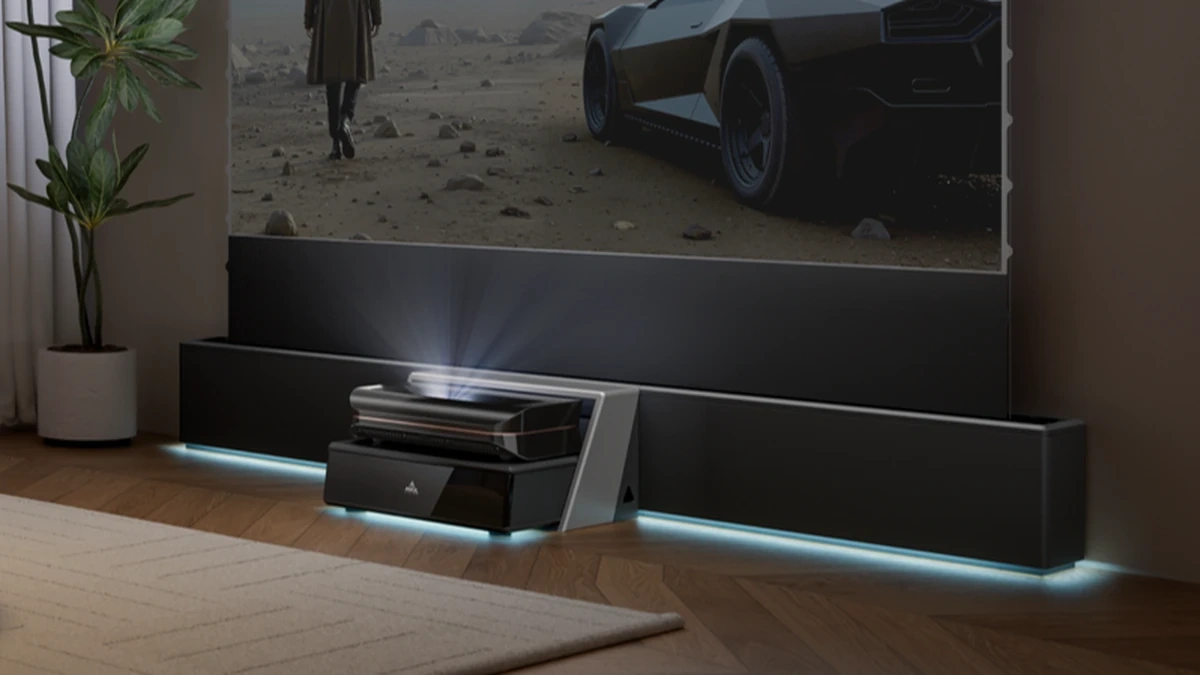
Releasing between January and March of 2026, the AWOL Vision Aetherion lineup represents the cutting edge of UST technology. Powered by DLP technology featuring Texas Instruments' new DLPC8445 display controller, the series splits into two hero models: the Aetherion Pro (2600 ISO Lumens) and the Aetherion Max (3300 ISO Lumens).
Both models feature a premium RGB Pure Triple Laser light source reaching 110% REC 2020 colour depth, an impressive 60,000:1 EBL contrast ratio via a motorized Iris lens, and an industry-leading 1ms input lag for competitive gaming. They come fully loaded with Google TV OS, Dolby Vision, IMAX Enhanced, WiFi 7, and a central audio channel.
For UK customers looking for a complete living room transformation, these projectors are available in comprehensive retail bundles that include premium Ambient Light Rejecting screens, acoustic motorized floor-rising screens, and integrated media stations:
- Aetherion Pro + 100"-120" Cinematic ALR Screen Bundle: From £2,899.00 (Save £400)
- Aetherion Max + 100"-120" Cinematic ALR Screen Bundle: From £3,699.00 (Save £621)
- Aetherion Max + 100"-120" Cinematic+ ALR Motorized Floor Rising Acoustic Screen: From £3,889.00 (Save £1,295)
- Aetherion Max + 100"-120" Cinematic ALR Motorized Floor Rising Screen + 120" Station: £5,199.00 (Save £1,195)
Matching the Projector to Your Lifestyle
Your personal entertainment habits should dictate which feature set you prioritize.
The Dedicated Movie Buff
If your goal is to recreate a pristine cinema environment, your focus should be on image accuracy, format compatibility, and frame handling. Look for models supporting Dolby Vision and IMAX Enhanced to ensure you are seeing movies exactly as the director intended. Features like a Filmmaker Mode (which disables artificial motion smoothing) and native support for cinematic frame rates (24 fps and 48 fps) are essential for preserving authentic motion cadence.
The Hardcore Gamer
Projectors are no longer just for slow, casual games. Modern premium units are built to handle current-generation consoles. Gamers should explicitly check for ALLM (Auto Low Latency Mode) and VRR (Variable Refresh Rate) to eliminate screen tearing. An ultra-low input lag—such as the 1ms response rate found in advanced DLP controllers—ensures that fast-paced first-person shooters and sports games feel entirely instantaneous.
The Smart Home Enthusiast
If your projector is the centerpiece of a connected household, integration is key. Look for machines that natively interface with platforms like Google Home, Apple HomeKit, and Amazon Alexa. Having a built-in voice assistant allows you to dim your smart living room lights, lower your motorized blinds, and turn on your projector using a single voice command.
Is It Worth Buying a Home Projector?
Investing in a premium home projector setup requires a higher upfront commitment than buying a budget TV. However, when evaluating the value proposition, consider the cost-per-inch of screen real estate.
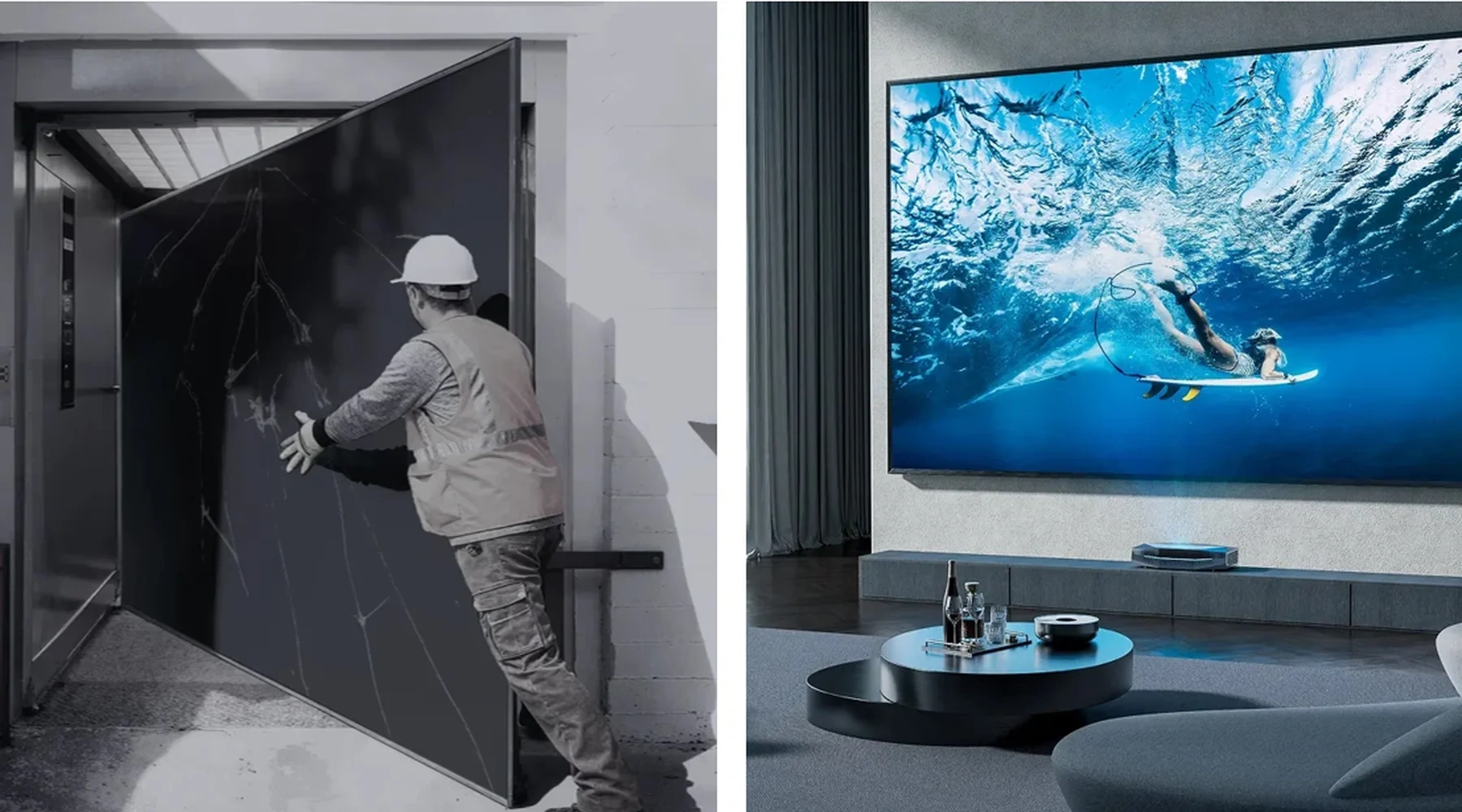
A traditional 98-inch or 100-inch LED/OLED television is incredibly heavy, difficult to deliver through standard UK doorways, and creates a massive, imposing black glass rectangle on your wall when turned off. An Ultra-Short Throw projector can casually cast an elegant, immersive 120-inch or even 150-inch display from an elegant, compact console box, offering a level of scale and cinematic immersion that a standard television simply cannot match. For true entertainment lovers, the return on investment is undeniable.
Frequently Asked Questions (FAQ)
Which projector is best for a home cinema?
For an authentic cinema experience in a standard home, an Ultra-Short Throw (UST) RGB Pure Triple Laser projector is ideal. It provides the massive screen size of a theater alongside wide colour gamuts (like Dolby Vision) without requiring complex ceiling mounts or long cable runs.
How many lumens do I need for a home projector?
If you plan to use the projector in a dark or dimly lit room, 1,500 to 2,000 ISO Lumens is sufficient. For a multi-purpose living room with ambient daylight, look for a projector that outputs between 2,600 and 3,300 ISO Lumens to maintain a vivid, clear image.
Can I watch Netflix directly through a projector?
Yes, provided the projector features an integrated, officially licensed operating system like Google TV OS. If a projector lacks native app licensing, you can easily access Netflix by plugging a streaming stick (such as an Amazon Fire Stick or Apple TV) directly into one of the projector's HDMI ports.
Do I need a special screen for an Ultra-Short Throw projector?
While you can project onto a flat white wall, an Ambient Light Rejecting (ALR) screen is highly recommended for UST projectors used in living rooms. It prevents ambient light from washing out the picture, massively improving contrast, black levels, and daytime visibility.
Discover More Insights