What Is a Short Throw Projector? Distance, Setup and UST Explained
October 30, 2026
A short throw projector creates a large image from a shorter distance than a conventional projector. Its lens allows it to sit closer to the screen, making a cinema-sized picture possible where a longer projection path would be awkward.
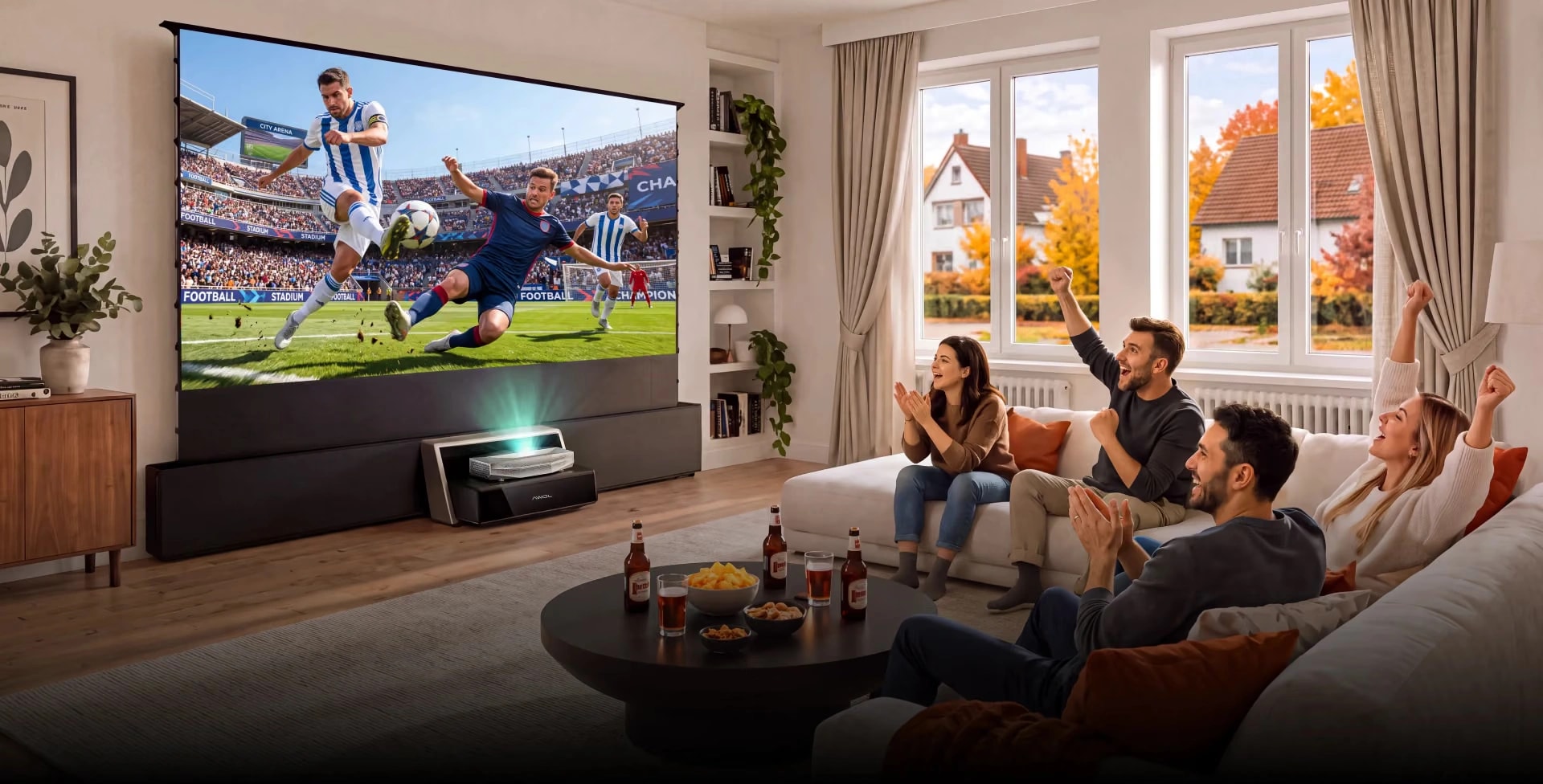
Imagine a film night in a living room where the sofa already occupies the back wall. A large picture is appealing; finding somewhere behind the seating for a projector is less straightforward. Short throw gives you another placement option.
There is an important distinction: short throw and ultra short throw are different types of projector. If you are picturing a unit sitting on a cabinet directly beneath the screen, you are probably thinking of ultra short throw, or UST.
Understanding that difference is the first step towards choosing a setup that fits.
Short Throw vs Ultra Short Throw vs Long Throw
“Throw” describes the relationship between projection distance and image width. For the same picture size, different lenses need different amounts of space.
|
Projector type |
Typical placement |
What to check |
|
Standard or long throw |
Further from the screen, often on a rear shelf or ceiling mount |
Available projection distance, mounting position and the light path |
|
Short throw |
Closer to the screen, often on a table or suitable mount |
Lens position, furniture placement and clearance for the beam |
|
Ultra short throw |
Very close to the screen, usually on a cabinet beneath it |
Cabinet depth and height, screen compatibility and installation dimensions |
These categories describe placement. They do not tell you a projector’s resolution, brightness, contrast or gaming performance.
What Makes a Short Throw Projector Different?
A short throw lens creates a wider image at a given distance than a conventional lens. That can help when you have enough wall space and a comfortable seating position, but little room behind the sofa.
However, “short throw” does not automatically mean portable, wireless or suitable for any coffee table. The projector still needs a position that matches its lens, image size and installation requirements.
What Does Ultra Short Throw Change?
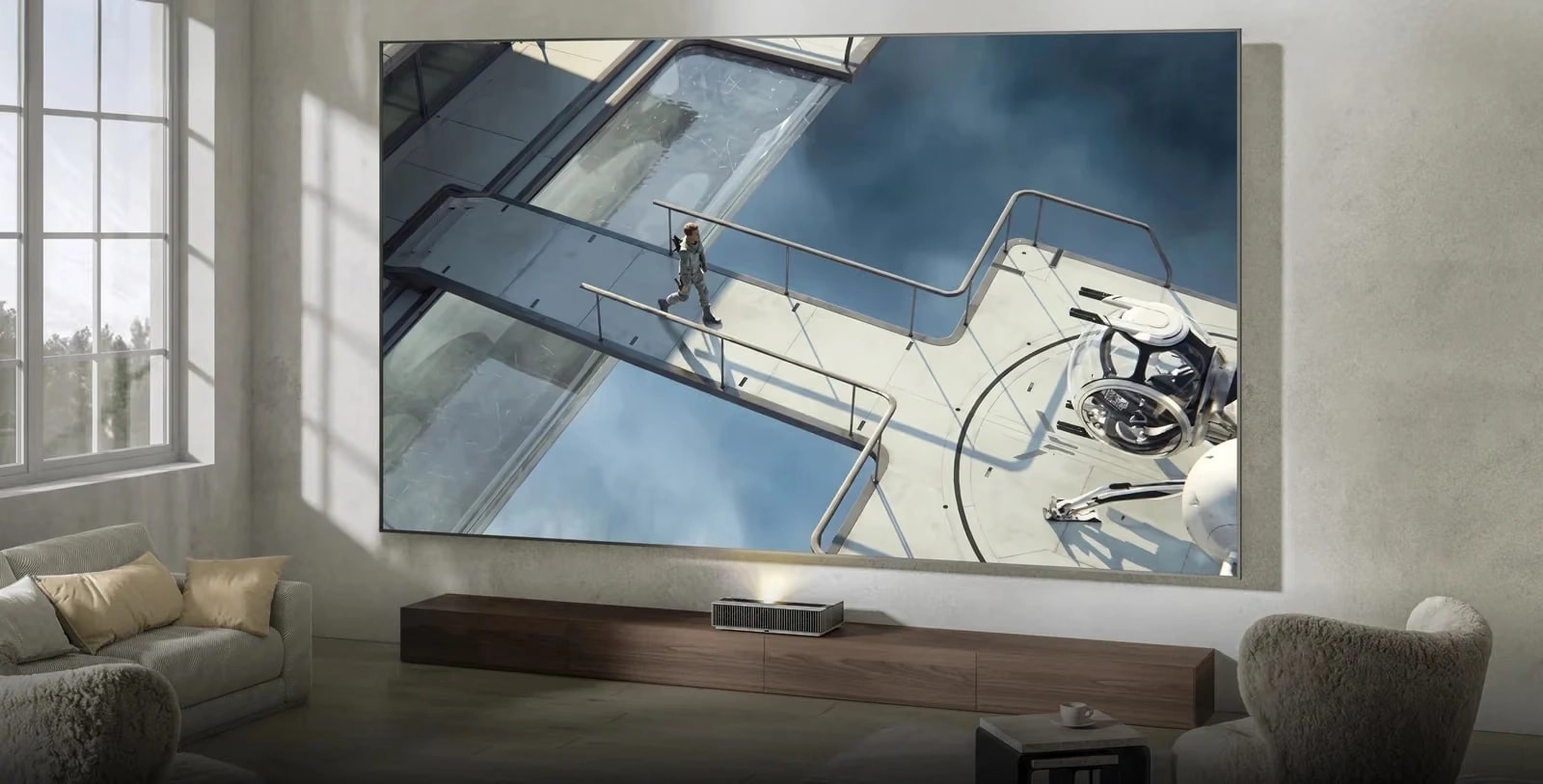
Ultra short throw moves the projector to the front of the room, close to the screen. Instead of placing a unit between the sofa and the picture, you can build the setup around a cabinet below it.
That arrangement needs careful alignment. Moving a UST projector changes the picture’s size and position, so cabinet height and screen placement matter as much as the gap behind the projector.
When comparing throw types, keep your intended picture size the same. Otherwise, two advertised distances may describe very different setups.
How Far Away Does a Short Throw Projector Need to Be?
There is no single distance that applies to every short throw projector. The answer depends on the model’s throw ratio and your chosen image width.
The calculation is:
Throw distance = throw ratio × image width
Use the width of the picture, rather than its diagonal measurement.
For a 16:9 picture, multiply the diagonal size in inches by approximately 2.214 to find the image width in centimetres. A 100-inch image is about 221 cm wide; a 120-inch image is about 266 cm wide.
Use the same units for image width and throw distance.
A 100-Inch Screen Example
A 100-inch, 16:9 image is approximately 2.21 metres wide. Here is how different throw ratios affect the required distance:
|
Example throw ratio |
Calculation |
Approximate throw distance |
|
0.5:1 |
0.5 × 2.21 m |
1.11 m |
|
0.8:1 |
0.8 × 2.21 m |
1.77 m |
|
1.5:1 |
1.5 × 2.21 m |
3.32 m |
These are calculated examples, rather than installation instructions for a particular product. Check the manufacturer’s distance chart and measurement reference point before positioning your projector.
Room length alone will not give you the answer. A four-metre room may have considerably less usable projection distance once you account for furniture and the projector’s actual position.
Start with the Available Position
You can also work backwards from your room.
Suppose you want a 100-inch picture and can position the lens approximately 1.5 metres from the screen:
Required throw ratio = 1.5 ÷ 2.21 ≈ 0.68:1
Look for a projector whose supported throw-ratio range includes that figure and whose specifications support your intended image size.
If a projector lists a range, such as 0.7–0.9:1, check how its optical zoom affects placement. Follow its installation chart rather than assuming every position within the room will work.
Measure to the actual projection surface, too. A screen mounted in front of an alcove or chimney breast will sit closer to the projector than the wall behind it.
Why UST Throw Distance Is Not the Same as Cabinet Depth
With an ultra short throw projector, three measurements can easily get confused: optical throw distance, the gap behind the projector and the total space the unit occupies.
A small wall gap does not mean you only need a shallow shelf.
For example, our Aetherion Max has a 0.2:1 throw ratio. For a 100-inch image, allow approximately 15.8 cm between the wall and the rear of the projector, then add the projector’s body depth when planning the cabinet.
Before choosing furniture, check:
- The required rear gap for your chosen image size.
- The projector’s full body depth.
- Cable clearance and ventilation requirements.
- The picture’s vertical position relative to the projector.
A cabinet can be deep enough yet too high, pushing the picture further up the wall than you intended. Equally, the screen may fit perfectly while the projector extends beyond the front of the furniture.
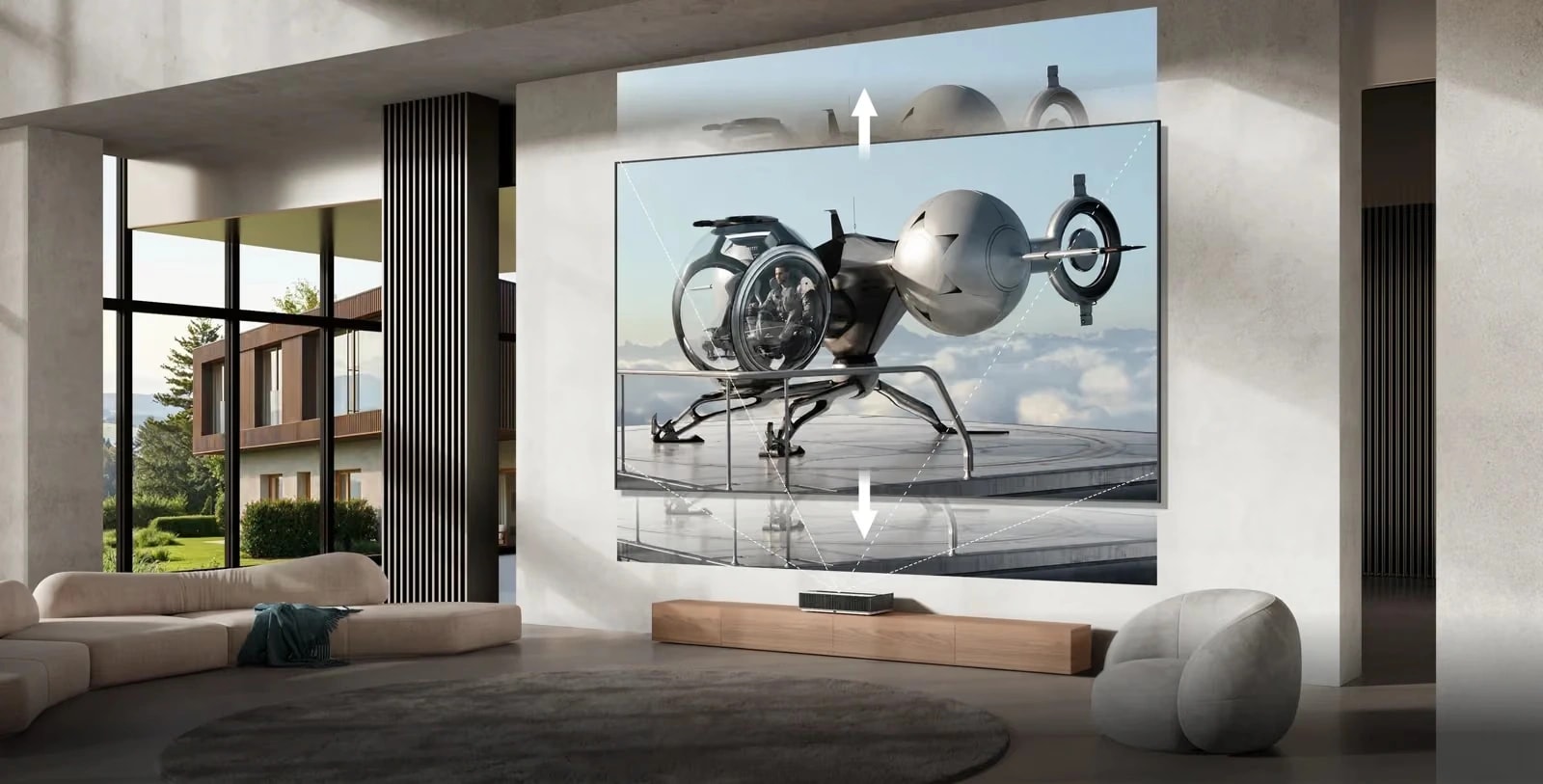
Optical adjustment can provide additional flexibility. Our LuxVision combines a 0.18:1 ultra short throw design with optical vertical lens shift, allowing you to adjust the picture’s vertical position through the optics. That gives you another way to align the image with your screen when fine-tuning the setup. The installation dimensions remain the starting point for choosing your cabinet.
For ideas on arranging seating, furniture and the screen together, explore our small cinema room ideas.
What Are the Advantages of a Short Throw Projector?
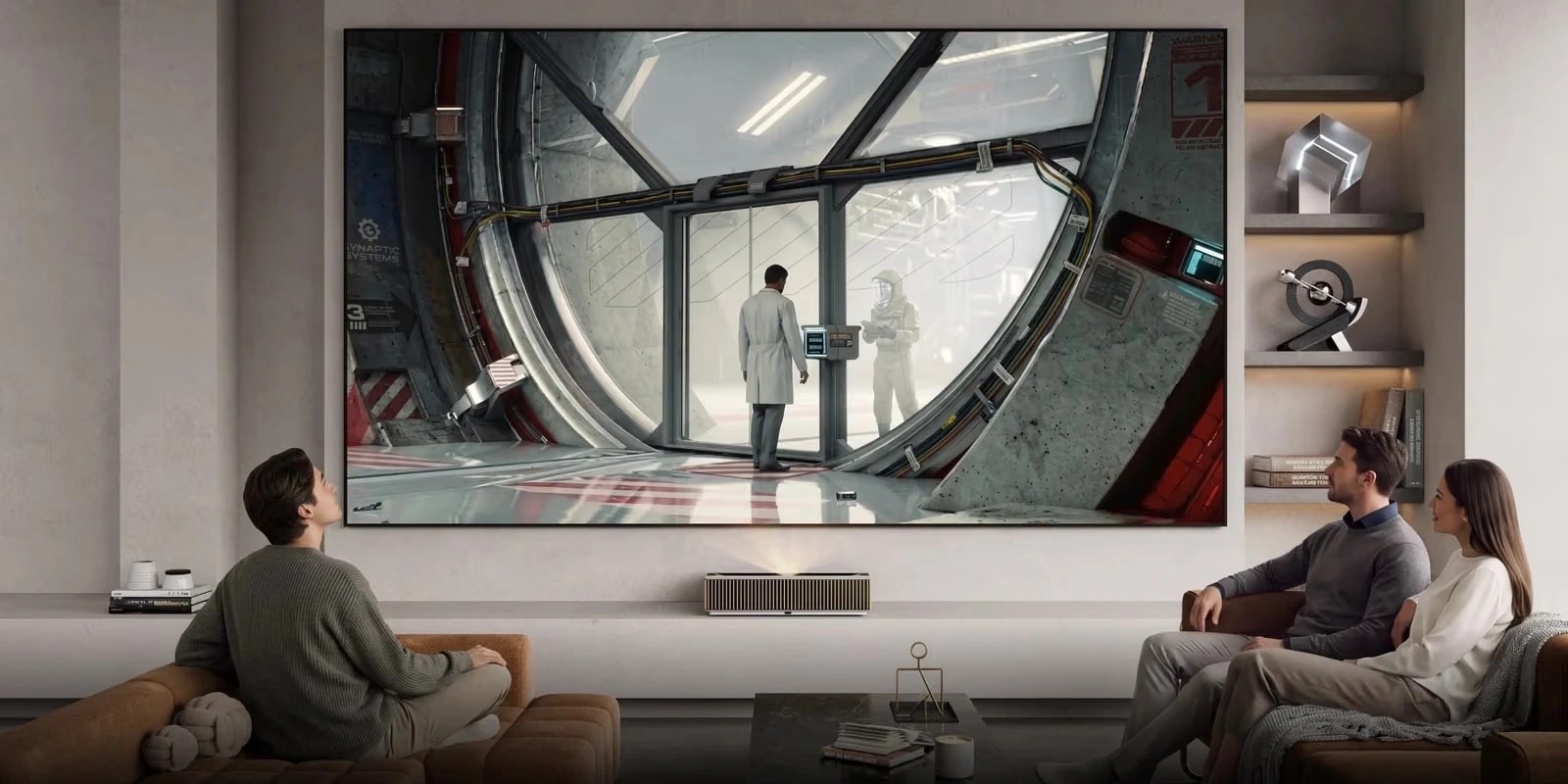
The main advantage is having more options for a large picture. A bedroom, spare room or shared living room may have space for a screen without offering a convenient rear shelf or ceiling position. A shorter projection distance can make that layout workable, provided the image size remains comfortable from your seat.
A shorter light path can also reduce the area where someone walking through the room interrupts the picture. The benefit depends on the layout: a short throw projector on a low table still needs a clear beam, while a UST setup keeps the projection path near the front wall. Check where everyday objects, speakers or a gaming steering wheel will sit.
What Are the Downsides of Short Throw Projectors?
Placement Still Needs Care
Shorter projection distance does not mean unlimited placement flexibility. Check whether the projector offers optical zoom or lens shift, and how those adjustments affect your options.
Digital keystone correction can help with image geometry, but it should not replace careful positioning. Start by getting the projector and screen aligned physically.
UST setups also project at a steep angle, making screen flatness and accurate alignment particularly important.
Screen Compatibility Matters
A bare wall may show an image, but its texture, flatness and colour can affect the result.
If you are choosing an ambient light rejecting screen, make sure it supports your projector’s throw type and intended mounting position. A screen designed for conventional projection is not automatically suitable for short throw or UST.
Treat the projector and screen as a system, especially when using directional screen materials.
Short Throw Does Not Guarantee Better Picture Quality
Throw type alone will not tell you how well a projector handles daylight, dark film scenes or fast gameplay.
Brightness, contrast, the screen and room lighting all affect the viewing experience. For gaming, check supported resolution, refresh rate and input lag at the settings you intend to use.
Our guide to whether projectors are good for gaming explores those performance choices in more detail.
Budget for the Complete Setup
Allow for the equipment your chosen layout requires, including a suitable screen, cabinet or mount. A projector that fits the room optically may still require changes to the furniture or screen position.
Comparing complete setups gives you a more useful budget than comparing projector prices alone.
Which Throw Type Fits Your Home?
Short throw can suit a room where a front table or suitable mounting position is available, but a longer projection path would be difficult.
Ultra short throw is worth considering when you want the projector on furniture beneath the screen and can plan the cabinet and screen positions together.
Standard or long throw remains a practical option when a rear shelf or ceiling mount provides the right distance without obstructing the room.
If you are comparing projection with a TV, consider the complete viewing experience. Projection offers flexibility in picture size; a TV avoids the need to plan projection distance and a separate projection surface. Room lighting, preferred screen size and everyday viewing habits will help determine which fits your home.
Before choosing a model, work through five measurements:
- Choose your picture size. Mark it out on the wall and check how it feels from your seat.
- Find the image width. Use the correct aspect ratio rather than the diagonal alone.
- Identify the projector position. Account for furniture and the light path.
- Check the throw ratio and installation chart. Confirm that the model supports your intended size from that position.
- Check the complete footprint. Include body depth, height, cables, ventilation and screen position.
Before you choose, mark out the image on your wall and check the projector’s installation dimensions against your furniture. Those measurements will show whether a short throw setup fits naturally—or whether an ultra short throw design belongs at the front of your room.
Discover More Insights