Projector vs TV: How to Choose the Best Display for Your Home
August 15, 2026
The historical compromise between massive screen size and display quality has collapsed. Choosing a display no longer forces buyers to sacrifice contrast for scale or hide in a pitch-black room to run a projector.
With modern multi-layer OLED panels, advanced Mini LED backlights, and hybrid laser-LED optical engines, both display types offer high-end visual performance. Today’s decision hinges on total cost scaling, spatial logistics, room lighting, and whether the priority is high-frame-rate gaming or 120-inch cinematic immersion.
Projector vs TV: At-a-Glance Performance Matrix
| Display Metric | Premium TV (Mini LED / Multi-Layer OLED) | Laser UST Projector (Hybrid Laser-LED) |
|---|---|---|
| Optimal Screen Size | 55 to 85 inches | 100 to 200 inches |
| Peak Brightness | 3,000 to 4,500 nits (Direct emission) | High lumens (Reflected off ALR surface) |
| Dark-Room Blacks | Per-pixel black (OLED) or 10,000+ local dimming zones | Deep cinematic contrast via high-contrast DMD chips |
| Gaming Performance | Native 4K @ 144Hz–165Hz with VRR | Native 4K @ 60Hz or low-latency high-FPS modes |
| Setup & Complexity | Self-contained, plug-and-play | Requires projector unit + ALR screen + audio system |
| Cost Scaling past 85" | Scales exponentially (£10,000+) | Linear, cost-effective scaling at 100"+ |
Screen Scale and the Cost Tipping Point: 85 Inches vs 100+ Inches
Evaluating value between a TV and a projector requires examining how hardware pricing scales alongside physical display surface area.
- 55-inch TV: ~0.83 square metres of display area
- 75-inch TV: ~1.55 square metres of display area
- 85-inch TV: ~1.99 square metres of display area
- 100-inch Projection: ~2.77 square metres of display area
- 120-inch Projection: ~3.99 square metres of display area
Where TVs Control the Market: 55 to 85 Inches
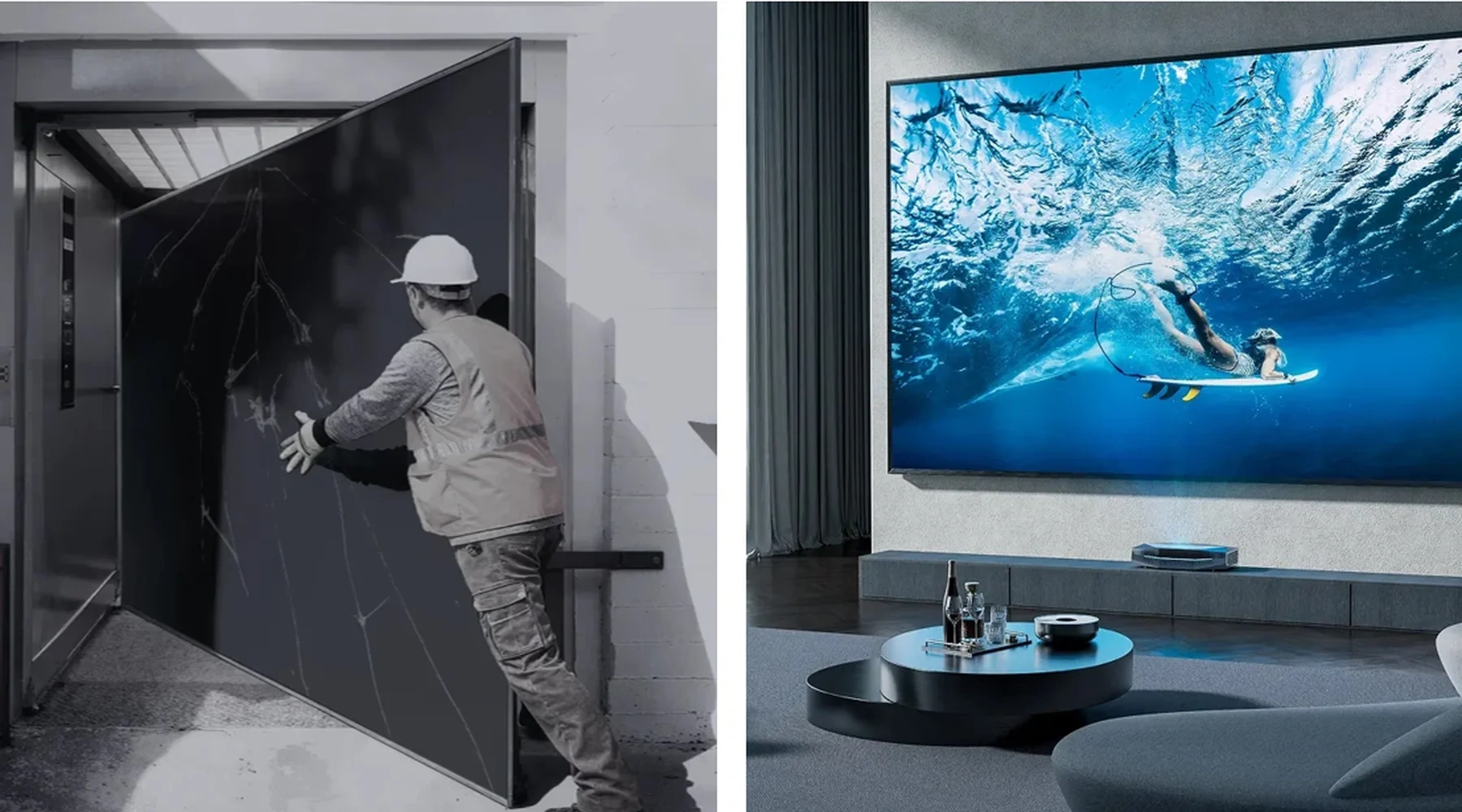
A budget of roughly £2,000 secures a high-tier 77-inch OLED or an 85-inch Mini LED TV. For viewing distances under three metres, an 85-inch panel provides high pixel density and immediate setup. However, manufacturing physical glass panels beyond 98 inches creates massive yield losses, shipping hazards, and installation friction, frequently driving panel prices past £10,000.
Where Projectors Win: Scaling to 100 to 200 Inches
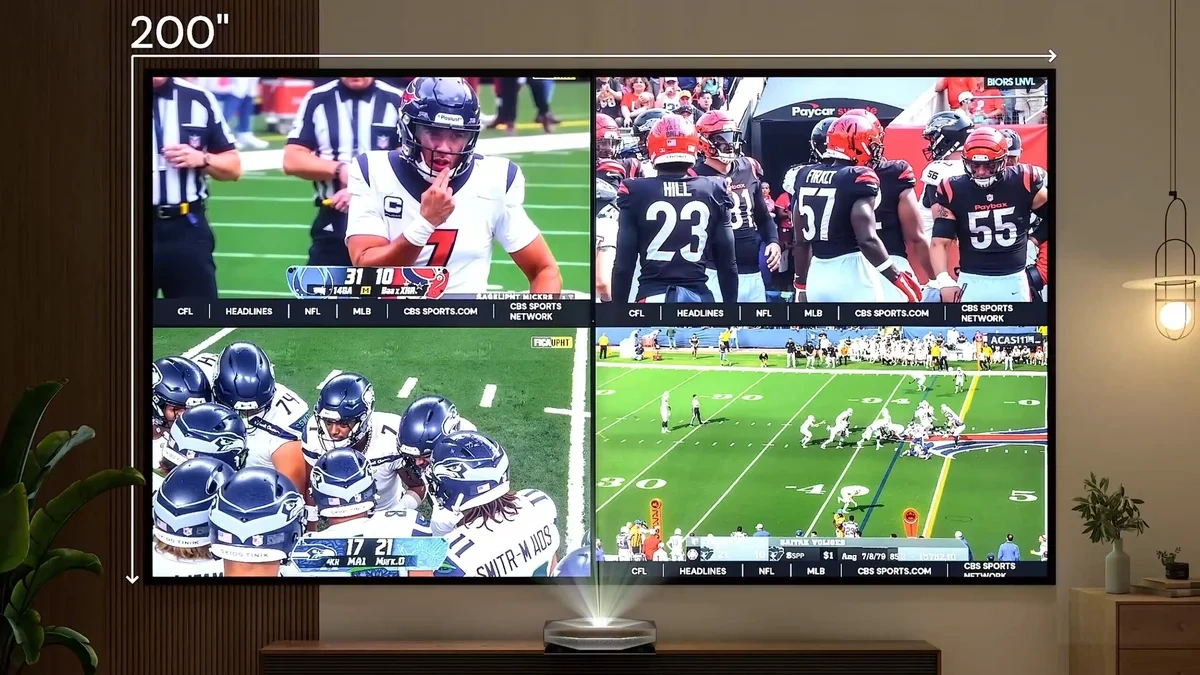
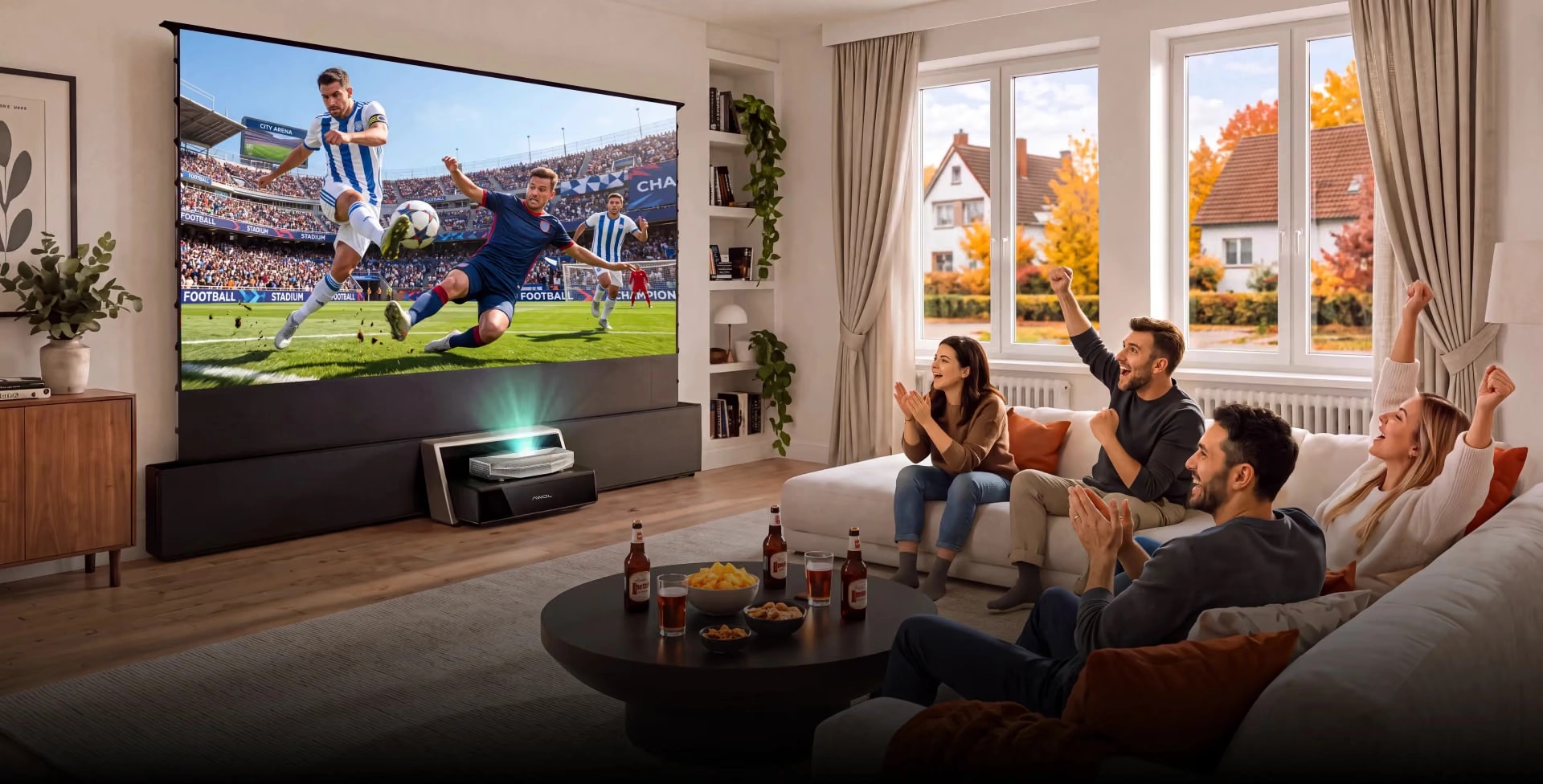
A 120-inch projected image provides roughly double the surface area of an 85-inch television. Projectors decouple display scale from the physical chassis size, allowing a single unit to throw a 100-inch, 120-inch, or 150-inch image without exponential jumps in hardware cost.
However, evaluating projector costs requires factoring in the total system build, which includes the projection engine itself, a lenticular Ambient Light Rejecting (ALR) projector screen to handle room reflections, and a dedicated external audio system.
Picture Quality and Lighting: OLED & Mini LED vs Hybrid Lasers
Lighting physics dictate how these displays handle ambient room light and high-dynamic-range (HDR) highlights.
Light Delivery Mechanisms Explained
- Direct Emission (Televisions): Light originates within the glass panel and travels directly into the viewer's eyes. This yields extreme peak highlight brightness (measured in nits) that easily overpowers uncontrolled ambient light.
- Reflected Light (Laser Projectors): Light travels from the laser engine to an ALR screen surface. The screen bounces the image toward the viewer, while its micro-lenticular structure selectively absorbs overhead room lighting.
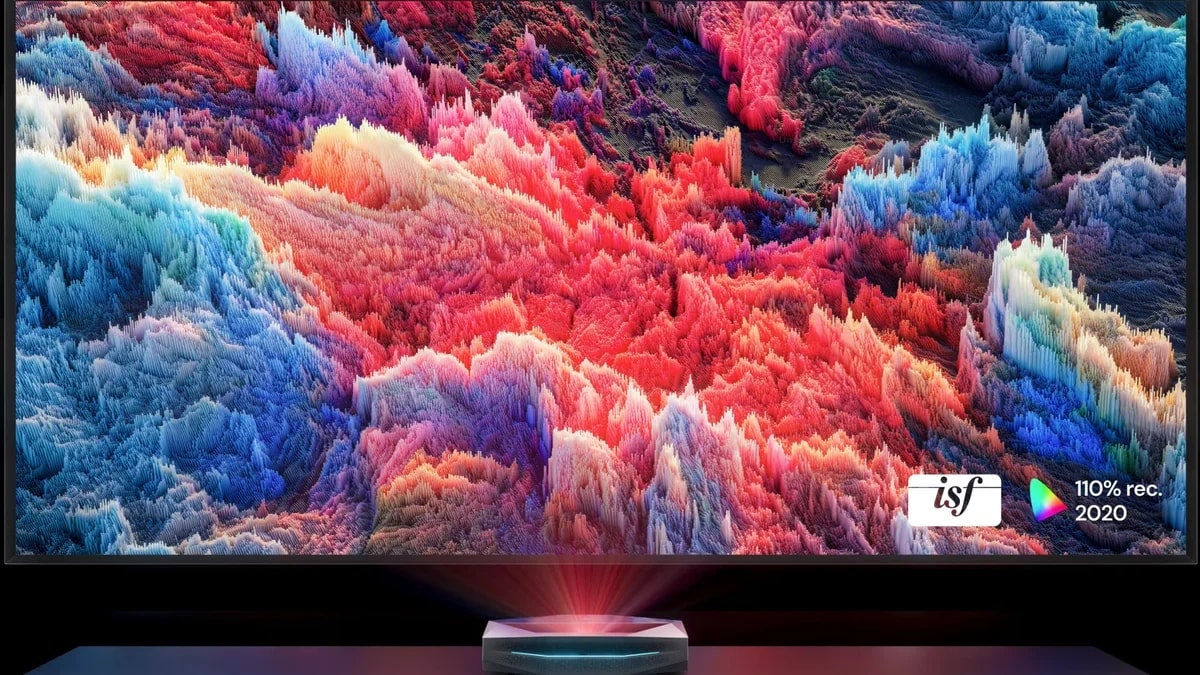
Direct Panel Emission: Extreme Brightness and Black Levels
Multi-layer OLED panels push peak brightness levels up to 4,500 nits while maintaining per-pixel black levels, effectively eliminating light bleed. Simultaneously, RGB Mini LED displays utilize over 10,000 local dimming zones to achieve extreme full-screen brightness. This makes flagship TVs highly resistant to uncontrolled, direct sunlight entering a room.
Reflected Laser Light: Cinematic Colour at Scale
Traditional projectors occasionally struggled with speckled highlights and colour fringing. Advanced multi-light optical systems—such as hybrid laser-LED engines—combine RGB lasers with LEDs to mitigate speckle and achieve colour volumes that can closely rival premium commercial cinemas.
When paired with an ALR screen, the lenticular surface structure selectively reflects light coming from directly below the projector while blocking overhead ceiling light, preserving deep contrast during daytime viewing.
Gaming and Processing: Frame Rates, Latency, and Image Chips
High-speed gaming and real-time image processing highlight key architectural differences between display types.
High-Refresh-Rate PC Gaming
Modern flagship TVs process native 4K signals at 144Hz to 165Hz with industry-standard Variable Refresh Rate (VRR) protocols. Input lag on modern gaming panels frequently drops below 5 milliseconds, making direct-emission TVs the preferred choice for competitive esports.
Cinematic Processing and Projector Latency
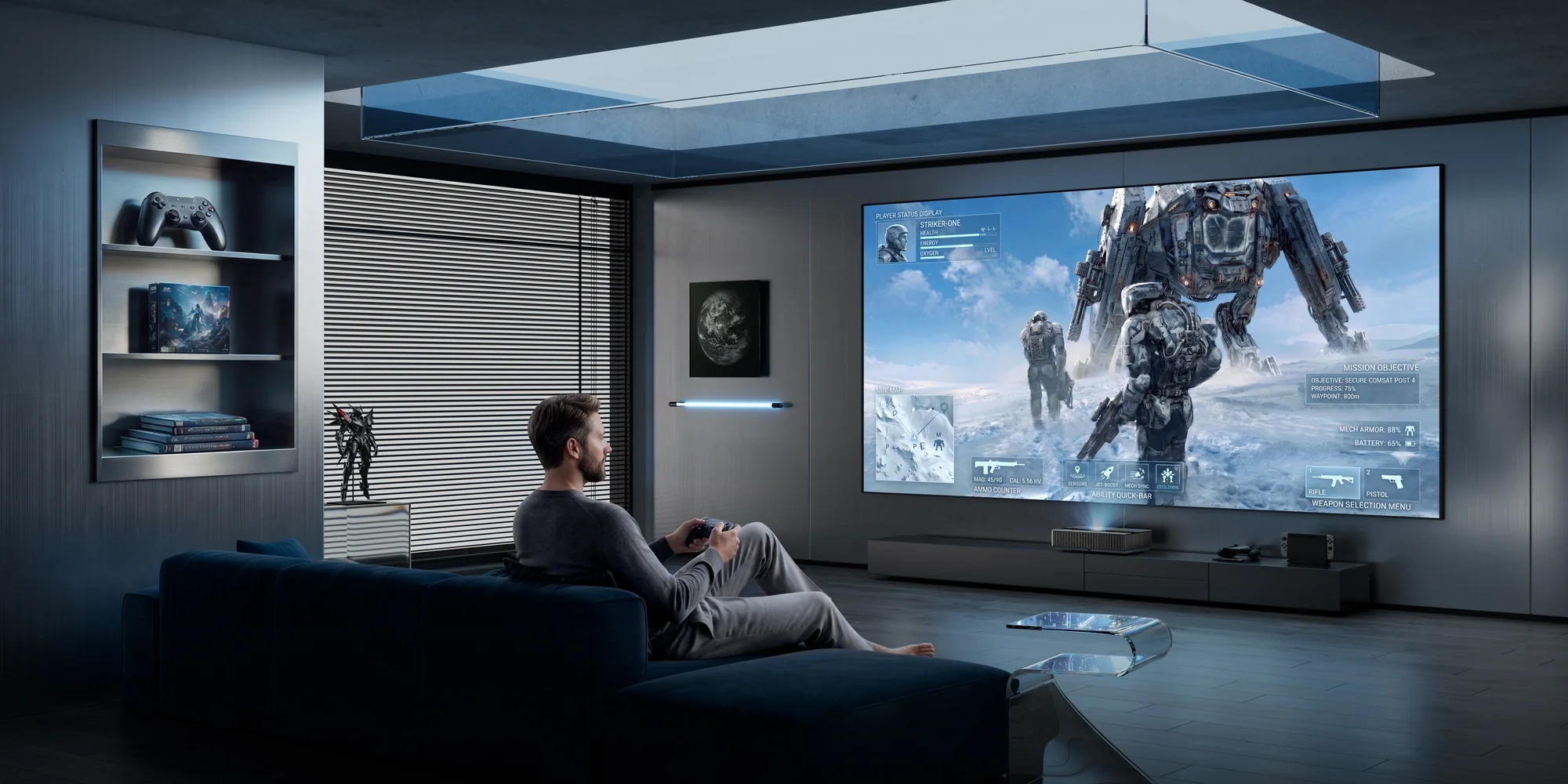
Ultra Short Throw (UST) laser projectors are optimized primarily for home cinema and high-fidelity video processing. Powered by flagship 4K UHD system-on-chips and dedicated video processors, premium projectors analyze video frame-by-frame to optimize dynamic metadata (like HDR10+ and Dolby Vision). While high-end TVs maintain the absolute edge for ultra-high frame rate PC gaming, modern laser projectors have closed the latency gap significantly, often featuring Auto Low Latency Modes (ALLM) that drop input lag down to 1ms for highly responsive console gaming.
Living Room Integration: UST Ergonomics vs Fixed Panel Mounting
Physical space limits, wall mounting integrity, and room aesthetics heavily influence display selection.
Room Layout & Integration Comparison
- Traditional Long-Throw Projector Setup: Requires ceiling-mounted hardware, long cable runs across the room (often 4+ metres), and a clear line-of-sight to avoid shadows when people walk across the room.
- Ultra Short Throw (UST) Laser Setup: Sits directly on a standard media console just centimetres from the wall, casting a massive image upward without ceiling wiring or room disruptions.
- Television Setup: Requires heavy-duty structural wall anchors (panels often exceed 50 kilograms) and leaves a permanent, massive black glass rectangle dominating the wall space when turned off.
The Ultra Short Throw Advantage
UST technology replaces long-throw ceiling mounts with wide-angle mirror optics. For users building high-end living room cinemas, a device like the AWOL Aetherion Max exemplifies this shift. It outputs a massive 3300 ISO lumens from an RGB pure triple laser engine, achieving 110% REC 2020 colour coverage. Because it sits mere centimetres from the wall and features integrated Google TV, Wi-Fi 7, and a motorized zero-light leakage lens, it acts as a self-contained entertainment hub—delivering a 100-to-150-inch display without the permanent room modifications required by a massive television.
Health and Ergonomics: Reflected Light vs Direct Panel Emission
Extended screen time introduces optical fatigue depending on how light enters the eye:
- Direct Emission Fatigue: TVs project light directly into the retina. Sustained viewing of high-nit HDR highlights in dark environments forces pupils to contract rapidly, causing digital eye strain.
- Reflected Light Comfort: Projectors bounce light off a screen surface before it reaches the viewer. This mimics natural human vision, scattering harsh blue wavelengths and drastically reducing eye strain during multi-hour viewing sessions.
Matching Your Space to the Right Display
Ultimately, the choice between a television and a projector comes down to physical space limits and primary viewing habits.
If your maximum wall space restricts your screen size to under 85 inches, or if your room is flooded with direct, uncontrolled sunlight hitting the wall itself, a television remains the most practical choice. A high-end TV is also the necessary route if your primary focus is competitive PC gaming requiring 144Hz+ refresh rates.
However, if you want a true 100-inch to 150-inch cinematic experience without paying five-figure sums for an oversized glass panel, a laser projector is the superior route. By pairing a UST laser projector with an ALR screen, you gain a massive, eye-friendly display that blends cleanly into the decor rather than dominating the room with a massive black screen.
To plan your installation further, consult our detailed projector for home guide or explore our complete tutorial on how to make a home cinema.
Frequently Asked Questions
Can an Ultra Short Throw laser projector fully replace a living room TV?
Yes. When paired with a lenticular Ambient Light Rejecting (ALR) screen, a high-lumen UST laser projector rejects overhead ambient light to retain high contrast. Integrated smart operating systems allow it to function like a standard television for daily viewing, streaming, and sports.
What are the hidden costs of setting up a projector system?
A television is an all-in-one panel with built-in speakers. A projector system requires budgeting for the projector unit, a fixed-frame ALR screen to prevent ambient light washout, and a dedicated audio system (such as an eARC soundbar) positioned at the screen wall.
How long do modern laser engines last compared to TV panels?
Modern laser engines operate for roughly 25,000 hours before degrading in brightness. Watching content for four hours every day equates to over 17 years of operational life, matching or exceeding the standard lifespan of OLED and LED television panels.
Discover More Insights